The 2025/6 AGM will now be held on the 29th March at the Scarisbrick Bowling club, starting at 7.30 pm. This is an opportunity for members to have their say. Public open days at the Hesketh Park observatory will continue on the second Sunday in the month with the exception of December and January. The observatory open three times on national Heritage open days that ran between September 12th to the 21st.
After several years following the end of our 2-year lease with Sefton MBC to manage the Hesketh Park Observatory on their behalf, we are now waiting to sign a new 5 year lease being finalised by Sefton MBC’s legal department. Conditions are the same as those in the former 2-year lease
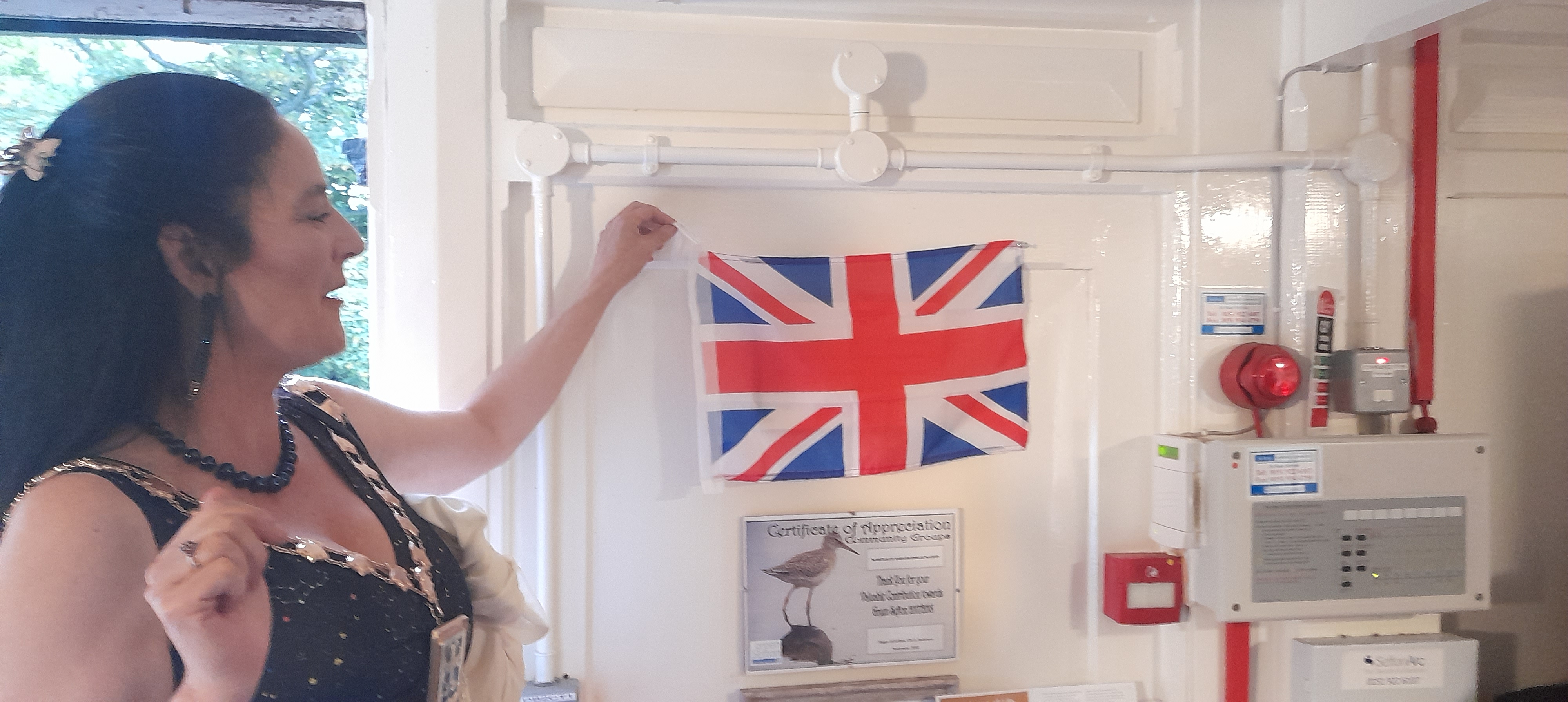
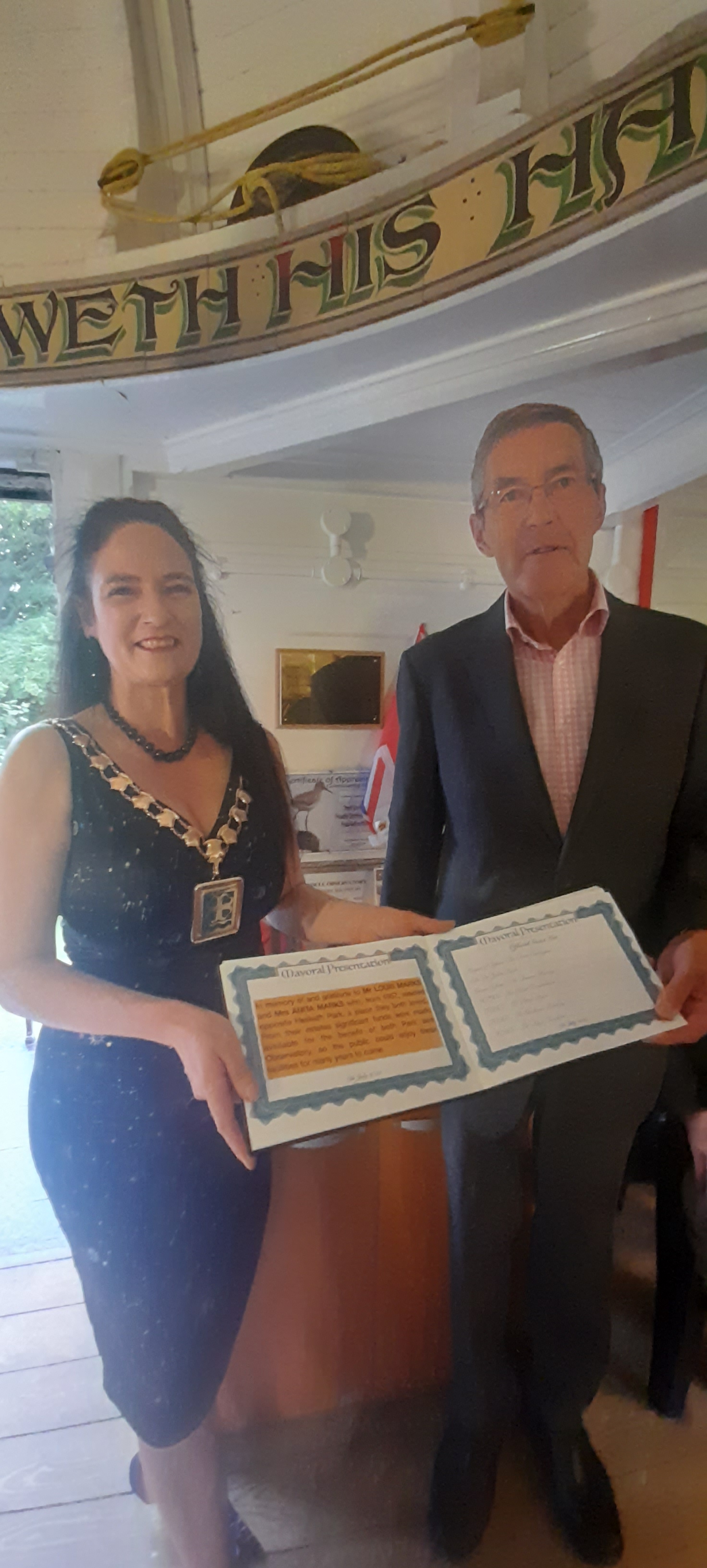
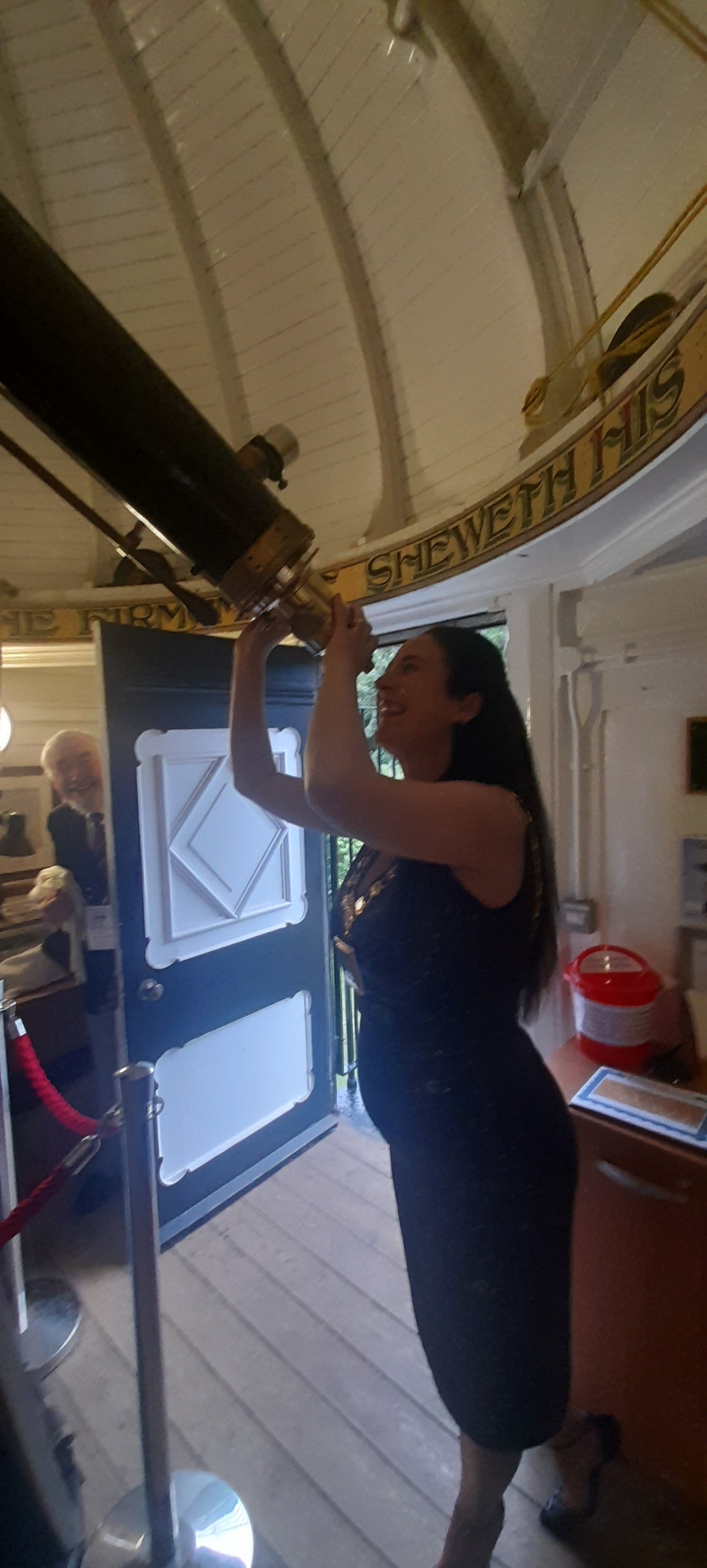
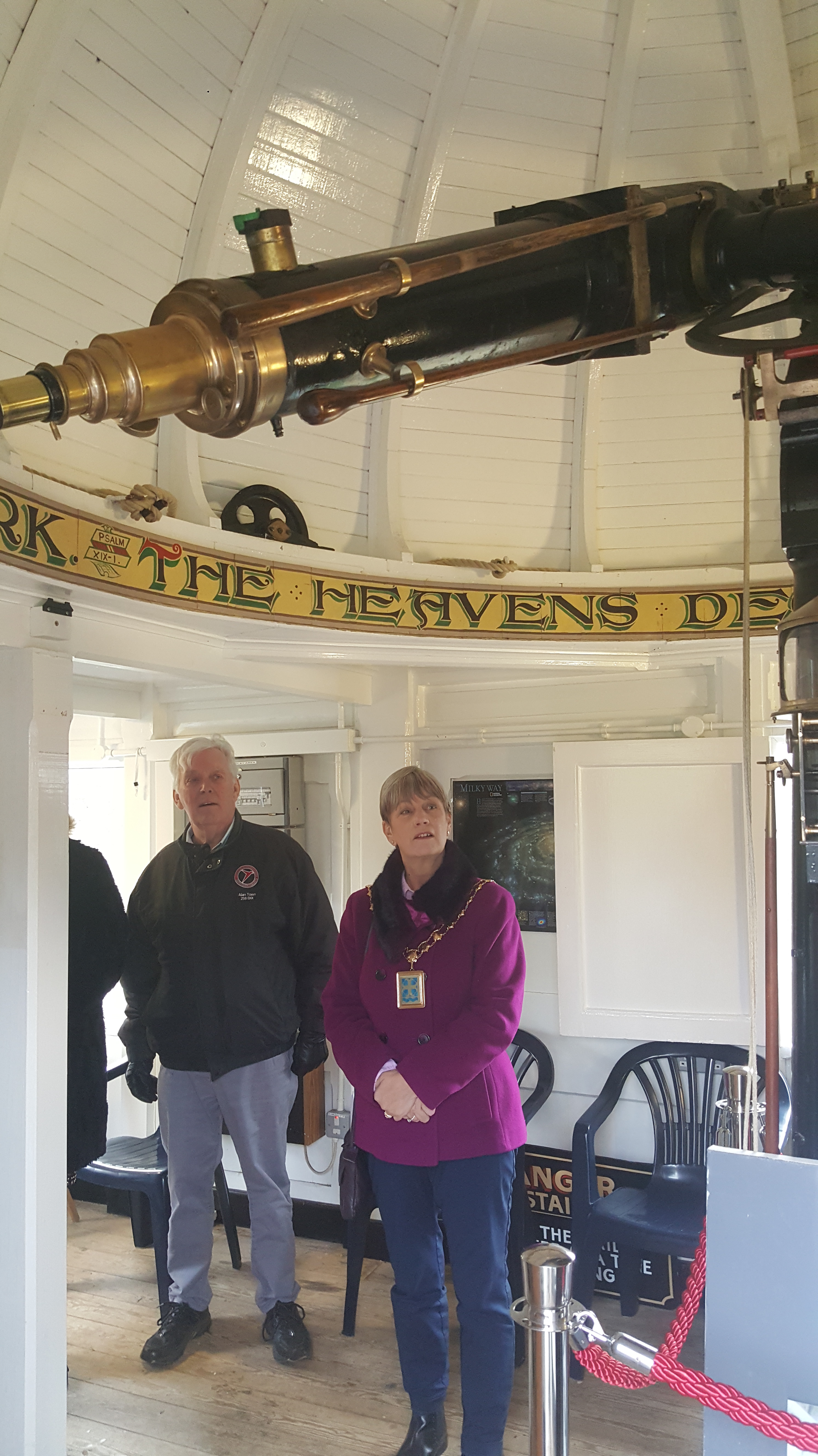
The former Mayor of Sefton, Cllr Clare Louise Carragher, visited the Grade 2 listed Victorian astronomical observatory located in Grade 2 listed Hesketh Park on Wednesday 6th July 2022 at 7.00pm. This was to officially unveil a commemorative plaque to the late Mr Louis Marks & Mrs Anita Marks who left a generous bequest to the Park they both loved to visit. It was a very successful and enjoyable evening, and the Mayor stayed longer than expected due to her interest in the observatory and its history, and like many park visitors had often wondered what was inside it, and was pleased to have finally discovered what was in it and learn about its history. The first photo shows the Mayor unveiling the plaque, the second shows the mayor and Richard Jacklin (a friend of the Marks family and one of the executors) holding a copy of the plaque, and the third shows the Mayor looking through the 1869 Cooke telescope.
1 2 3
The Society was recently appointed Tenant and also benefited from this bequest, and has already purchased a Hydrogen-alpha telescope system to reveal solar features of the sun. This specialist equipment enables features like surface convection cells that transfer energy generated in its core to its 5,500 degree Celsius plasma surface known as the photosphere, where this energy is radiated into space, together with more violent phenomena like prominences, solar flares, and coronal mass ejections.
At our AGM on the 19th of May 2022, several changes to our committee were made. Mike Dow stood down as Chairman, and our former Treasurer Richard (Rick) Tyers was appointed as Chairman after standing down as Honorary Treasurer. Our auditor Barry Powrie was appointed as our new Hon Treasurer, and Andrew (Andy) Robertson who has been acting Hon Secretary since Eddie Vanner resigned as Honorary Secretary during lockdown, was officially confirmed in this post. Bob Mount also stood down as Observatory manager and Ray Bennion was appointed to this post, which was renamed Observatory curator. In addition, two existing Society members were appointed to non-executive roles, namely Christine (Chris) Tyers and Jackie Butterworth. Following a generous bequest to the Society from the executors of a local family, the Treasurer’s report confirmed the recent purchase of equipment to image the sun in Hydrogen-alpha, together with planned expenditure to develop the ground floor of the astronomical observatory in Hesketh Park as an information centre. This was to highlight the roles of Joseph Baxendell and his son as the former Southport corporation’s official meteorologists who used the former Fernley Meteorological observatory located in Hesketh Park to provide daily weather forecasts to the town. In addition, the decision to cease hosting Zoom meetings after the end of May 2022 was agreed.
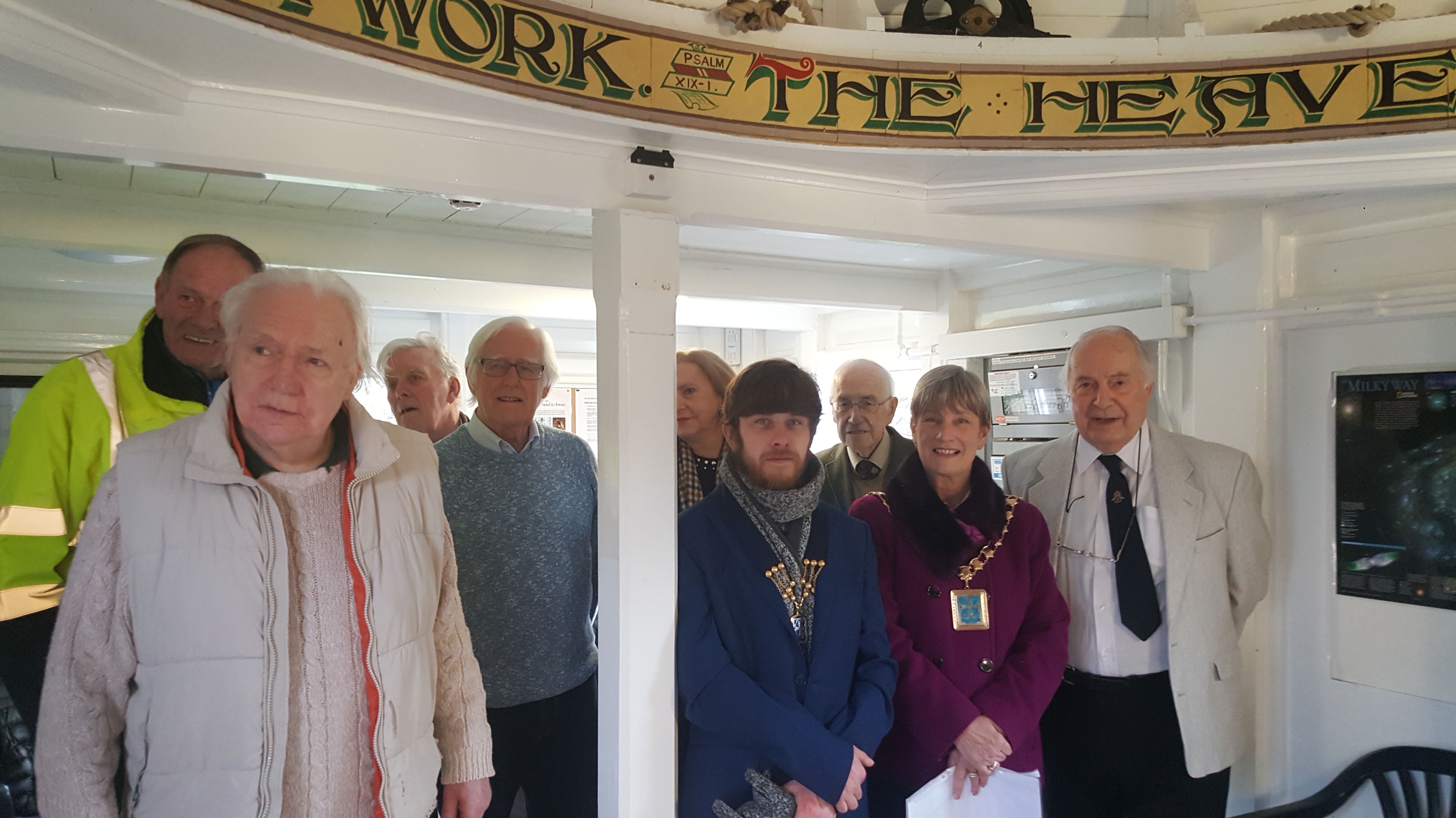
On Wednesday 5/2/2020 Southport AS who manages the observatory on behalf of Sefton MBC had the pleasure of showing the Mayoress of Sefton, Councillor June Burns, and her son who was acting as her Consort, the Grade 2 listed Victorian observatory and 1869 Cooke telescope in Hesketh Park. The Mayoress expressed delight that such a unique observatory and telescope was still available for the people of Sefton to visit and learn about the astronomical studies undertaken by the amateur Victorian astronomer Joseph Baxendell Snr. together with its current astronomical capabilities.
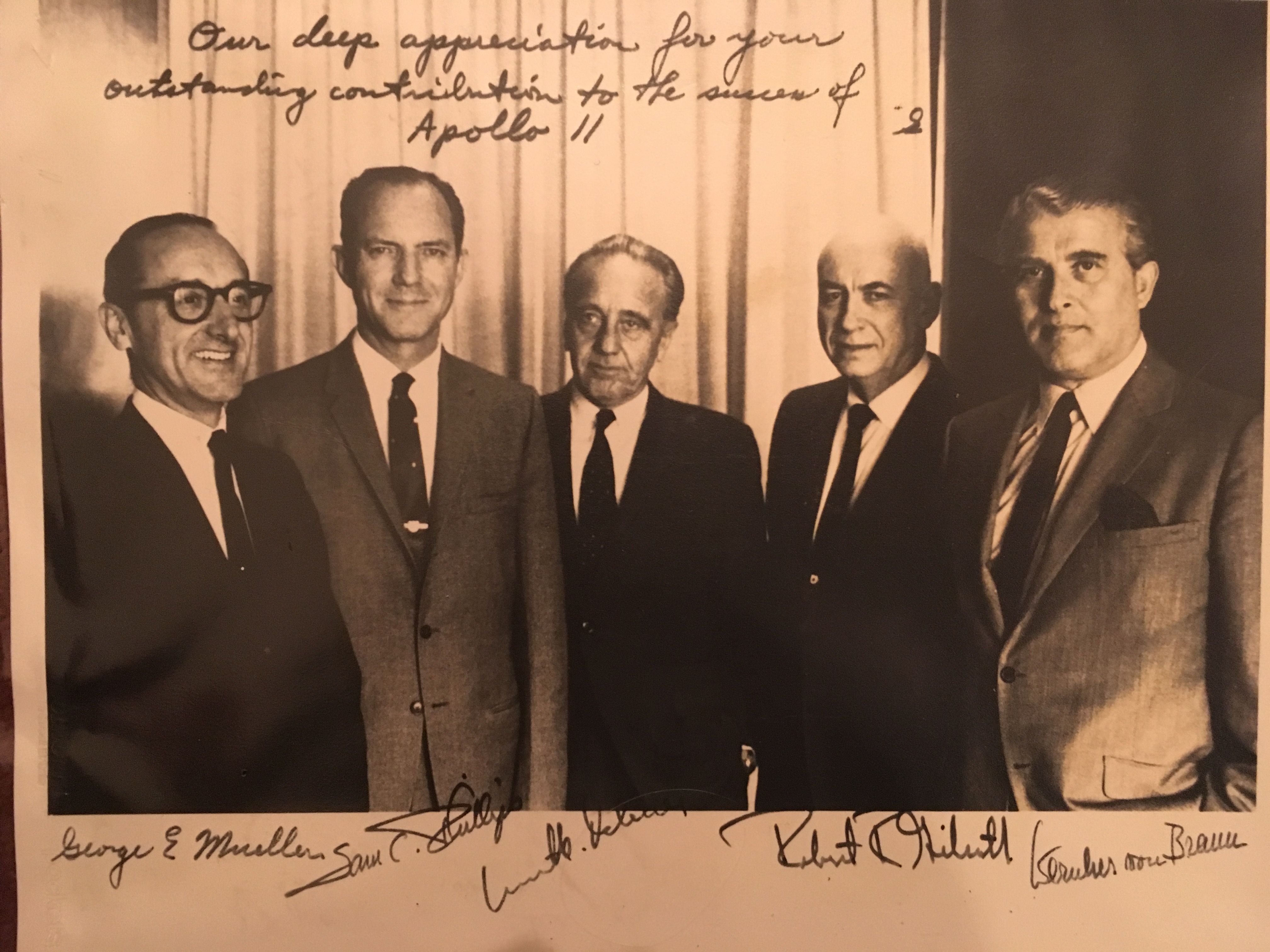
Our previous chairman, the late Mike Dow had a rare signed photograph of five key members of the NASA team that developed the Saturn V rocket used to send the first astronauts to the moon in 1969. From left to right is George Edwin Mueller who headed NASA’s Office of Manned Space Flight from September 1963 until December 1969. Samuel Cochran Phillips a United States Air Force four-star general was Director of NASA’s Apollo Manned Lunar Landing Program from 1964 to 1969. Kurt Heinrich Debus, a former German V-2 rocket scientist during World War II was brought to the United States under Operation Paperclip, and in 1962 became the first director of NASA’s Launch Operations Center. Robert Rowe Gilruth was an American aerospace engineer and an aviation/space pioneer who became the first director of NASA’s Manned Spacecraft Center. Finally, Wernher von Braun was a leading WW II German rocket engineer who developed the V2, who also went to the US after the war, and later led the project that developed the Saturn V rocket that sent the Apollo spacecraft to the moon.
The observatory open day on July 20th, 2019, was to celebrate the 50th anniversary of the Apollo 11 manned landing on the moon which was a great success. 347 visitors came which was 114 more than the previous record number. For details of this remarkable Apollo 11 mission visit this NASA webpage.
The open day celebrating the 150th-anniversary of the Cooke telescope & observatory on 26th May proved popular and attracted 233 visitors.
On Saturday 15th May, Ray and Rick attended a meeting of the NW Group of Astronomical Societies at Liverpool AS’s Pex Hill Observatory. We reported our outreach activities to member societies attending, and how our President, Professor Michael Bode had been advising the Botswana International University of Science & Technology (BIUST), in Palapye in central Botswana, on how to establish an Astronomical Society of Botswana (ASB). Once established the intention of ASB was to provide a national focus for astronomy, and support the establishment of amateur astronomical groups within the country. Further, that our President had invited us to consider twinning with ASB to help demonstrate how an amateur UK society operated and help them with their long-term development. Our committee decided this was a unique opportunity to extend our outreach programme, so we accepted this invitation. Subsequently, they sent us a short PowerPoint presentation about themselves, and in return, we sent them a similar one about our history, structure, and aims & objectives. These outreach reports were all sent to the President of the Federation of Astronomical Societies.
Sadly our former Chairman Mike Dow, one of our longstanding members who also maintains and repairs the mid-Victorian telescope in the Hesketh Park Observatory, and was elected a Fellow of the Royal Astronomical Society has died..
We’re pleased that Professor Michael Bode BSc (Hons), Ph.D., FRAS, CPhys, FinstP accepted our invitation to become President of the Society. He retired in 2015 as Professor of Astrophysics at Liverpool John Moore’s University where he was the founding Director of the LJMU Astrophysics Research Institute. His research work focused on furthering our understanding of exploding stars (Supernovae), and he’s held both Advanced and Senior Fellowships at the UK Research Councils. He has published over 240 papers in the top peer-reviewed international journals in astronomy, including 14 Nature Letters, and edited 5 books. He has given many public talks on his areas of expertise and appeared regularly on BBC TV’s ‘Sky at Night’.
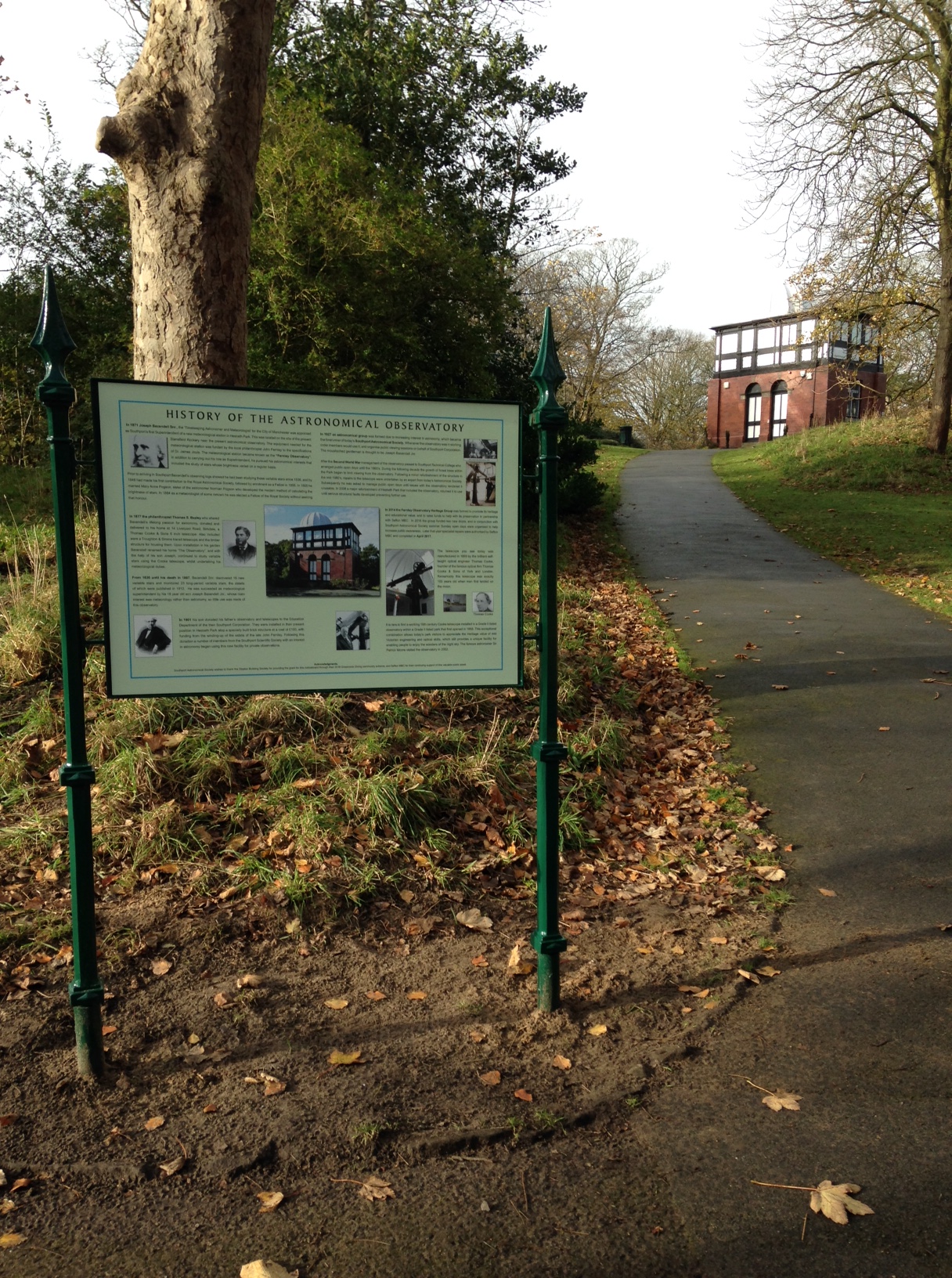
Following the award of our 2016 Skipton Building Society Grassroots grant, the information panel was installed near the observatory in Hesketh Park. The Society for the History of Astronomy included this photo and a short write-up about the information panel, and the history of the observatory in their spring 2018 e-newsletter. On p 9 they printed a readable image of the information panel.
Sefton MBC asked the Society to submit their proposals on how we could develop the educational and tourism potential of the Hesketh Park observatory, which has been submitted. Given our long-term partnership with Sefton and astronomical knowledge and expertise, they accept we are best placed to maximise the educational value and interest this subject has to offer.
On Wednesday 26th April 2017, the refurbished observatory was handed back to Sefton MBC by the contractor Maysand. These photographs confirm the observatory is now in the best condition since first installed in Hesketh Park in 1901.


For more information about the history of the observatory visit our Joseph Baxendell & his observatory page, and for information on buying and using telescopes visit our Introduction to Astronomy page.
 southportastro.org